Framed vs. frameless cabinets
Every cabinet is built one of two ways: with a face frame on the front of the box, or without one. Here's how they differ, what each means for doors and storage, and which of the lines we carry use each.
The difference
It comes down to what's on the front of the box.
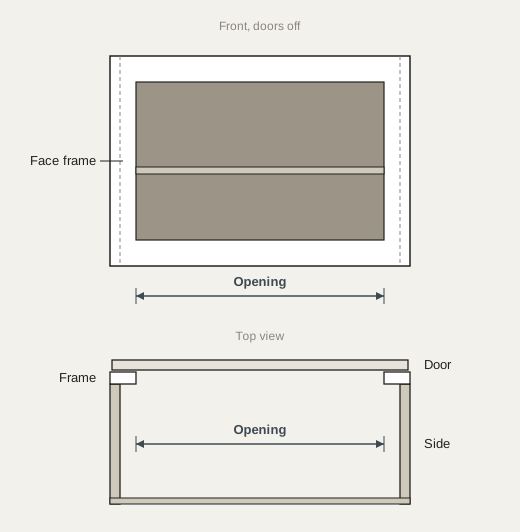
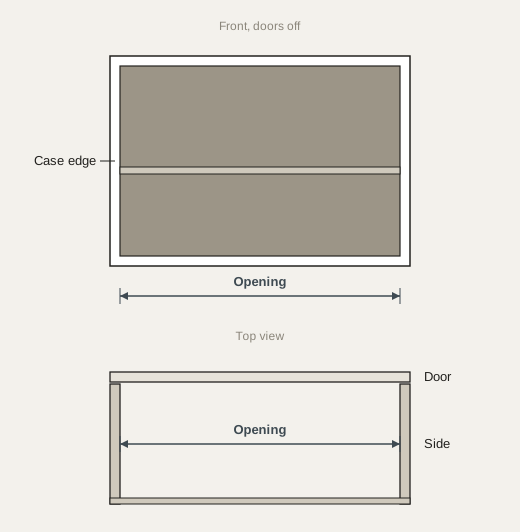
A framed cabinet has a frame of solid wood rails and stiles fastened to the front of the box. A frameless cabinet leaves that frame off: the doors hang from the box sides, and the front edges of the box are covered by the doors. Both are common, and both can be built well. The difference shows up in which doors you can choose, how the gaps between doors look, and how easy it is to reach inside.
At a glance
Framed cabinets
The traditional way to build a cabinet, and the way most of our lines are built.
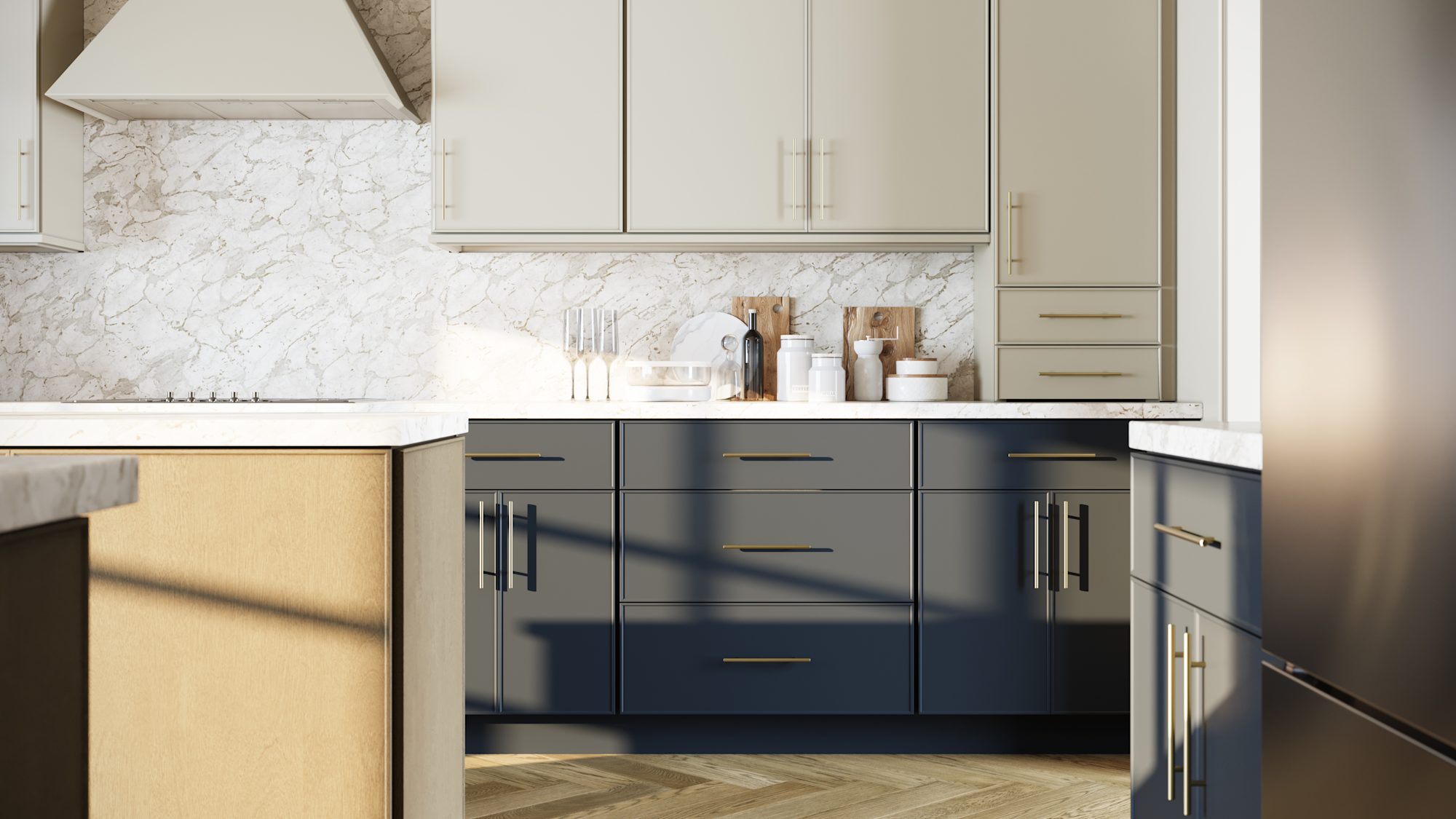
The face frame stiffens the front of the box and gives the hinges a solid place to mount. It's also what makes three different door overlays possible, because the doors can cover the frame, cover part of it, or sit inside it.
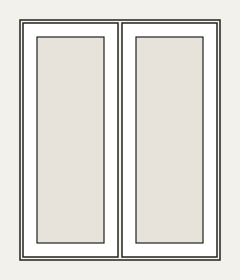
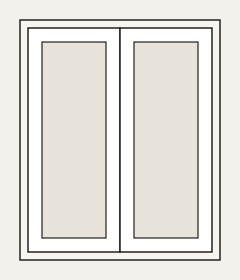
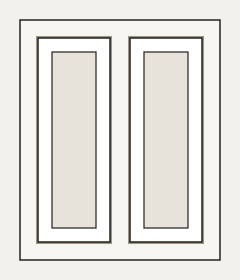
Full overlay
Doors cover nearly all of the frame, with small gaps between them. In our catalog: KCD Premier Series (Brooklyn, Shaker, Oslo), Northville and J&K.
Partial overlay
Doors cover only part of the frame, so more of it shows between doors and drawers. In our catalog: KCD Builder Series (Essential) and Fabuwood Discovery and Metro.
Inset
Doors sit inside the frame, flush with its face, so the whole frame shows. None of the door styles in our catalog are listed as inset today.
Frameless cabinets
Sometimes called full-access or European-style.

With no face frame, the box sides carry the hinges, so frameless boxes are typically built from thicker panels. Nothing projects into the opening, which makes the whole interior easier to reach and lets drawers be wider than in a framed cabinet of the same size. Doors are full overlay, covering the front edges of the box with small, even gaps. That clean, continuous look is why frameless cabinets are popular in contemporary kitchens, but they work with other styles too. Our showroom has frameless samples, so you can see the difference in person.
Fabuwood Illume
Fabuwood describes Illume as European-style frameless construction with an engineered furniture board box, full overlay doors, full access, and BLUM clip-on concealed hinges.
Fabuwood Ovela
Fabuwood describes Ovela as American-style frameless construction with ¾" plywood sides, top and bottom, a ½" plywood back grooved into the sides, full overlay doors, and BLUM clip-on concealed hinges.
Sources: Fabuwood Illume, Fabuwood Ovela, Fabuwood on Ovela construction.
Our lines, framed or frameless
Most of the lines we carry are framed. Fabuwood's Illume and Ovela are frameless, and Plain & Fancy is built both ways.
Sources: manufacturer specifications, including the KCD catalog, the J&K catalog and Fabuwood's cabinet lines. Northville details are from its published specifications on our Northville page.
How to choose
Neither is better across the board. It depends on the look you want and how you use your kitchen.
Framed may suit you if
- You want partial overlay or inset doors, or like the look of a visible frame.
- You want the widest choice of the lines we carry.
- You're planning a traditional or transitional kitchen.
Frameless may suit you if
- You want to reach the whole interior and fit the widest drawers.
- You want slab doors with small, even gaps.
- You're planning a contemporary kitchen.
The box material, drawers and hardware matter as much as the frame. A designer can walk you through both on your layout.
Not sure which fits your kitchen?
A designer can compare framed and frameless options on your layout, and you can see samples of both at our showroom. Save the finishes you like to My Selections and send them with your request.